Artemii Karapetian
I build mathematical theory and the software that makes it real: a Lean 4–verified algebraic theory, a fractal sandbox, an AI agent inside Minecraft, and statistical research.
What I have built
Algebraic theory of oriented, transparent layers
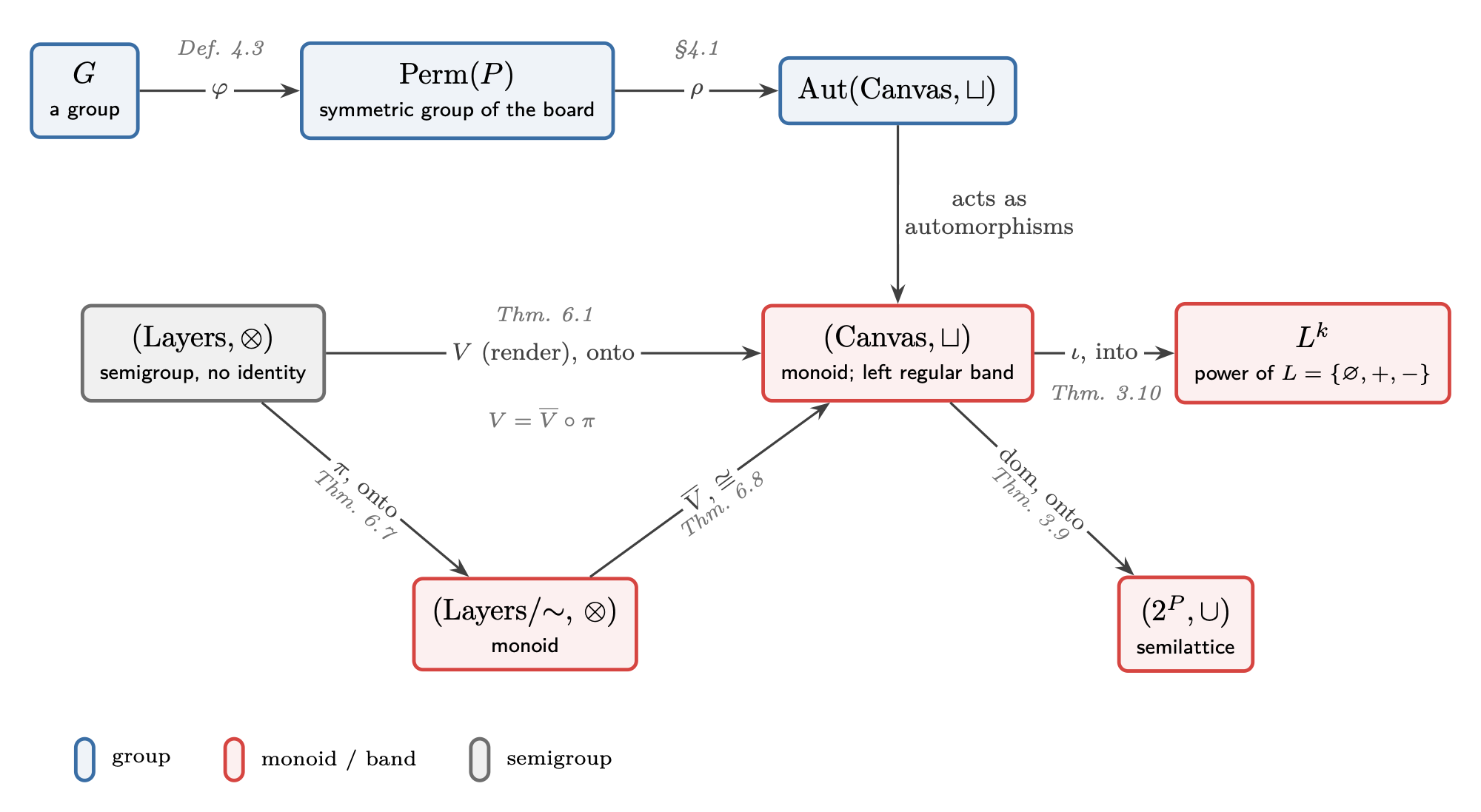
An algebraic theory of oriented, transparent layers verified in Lean 4. Started in winter 2026 from my intuition about rotation of complex numbers and developed over many months. I have committed to it and spent my breaks and free periods developing it. Along the way, I taught myself abstract algebra to develop my ideas.
My interest arose from the meeting of two operations with different natures: an override[1] and a permutation. Override is lossy, while permutations are by design bijective and preserve all the data. In simpler terms, my research investigates how these two operations work together with respect to images and their stacking.
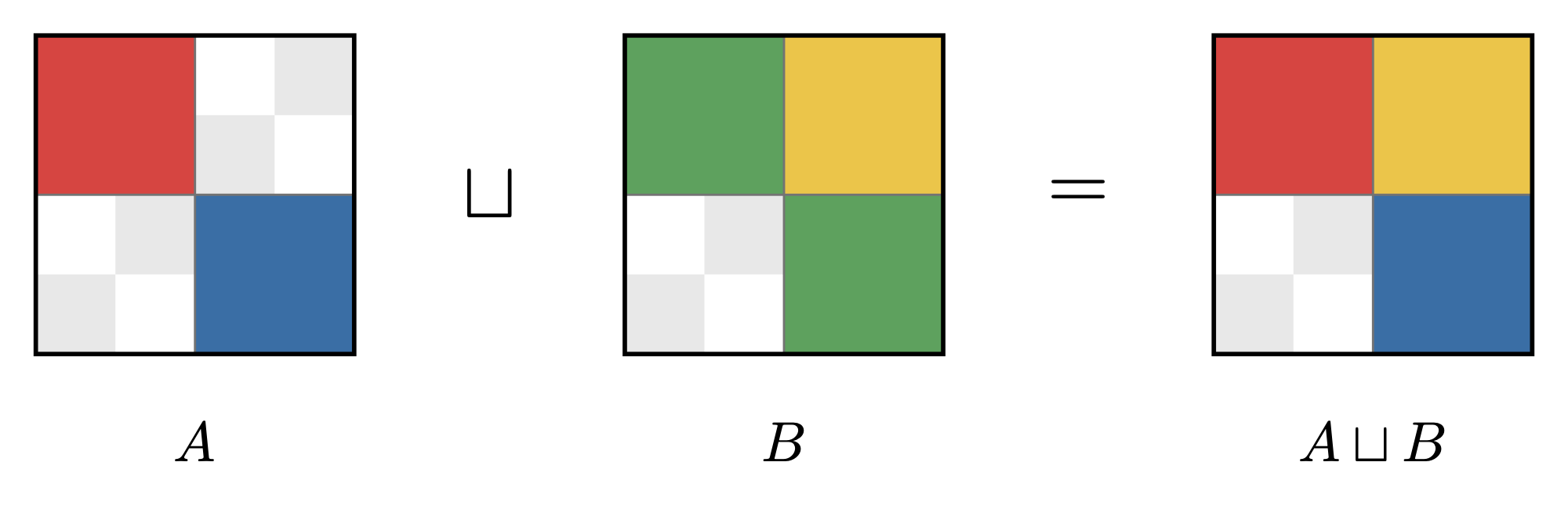
A picture is a function from positions to colors and a transparent element. Overriding two pictures means stacking one on top of the other. A layer is a pair of a picture and a lossless symmetry action (e.g., rotating a picture by 90°).
In plain English, here is what is proven. When a layer can be turned in more than one way, stacking layers has no “do-nothing” element and no inverses.
If all layers that show the same picture are considered as one object, a “do-nothing” element appears. The price for that is that it discards everything about layers up to visual equality, so it behaves exactly like pictures under override.
In a finite case, the number of ways to rename all layers such that stacking works as before is ((|G| − 1)!)|Canvas| · |Aut(Canvas, ⊔)|.
I sent an early version of the paper to Prof. Nathan Carter (Bentley University, author ofVisual Group Theory). On a first reading he replied that it had “absolutely zero typos, grammar mistakes, or mathematical errors” and accurately captured the ideas. The theory has developed since that version.
Authorship disclosure: conceived and directed by me, developed with AI assistance, and credited as “Artemii Karapetian.” I supplied the idea and direction, and judged and corrected the formal content.
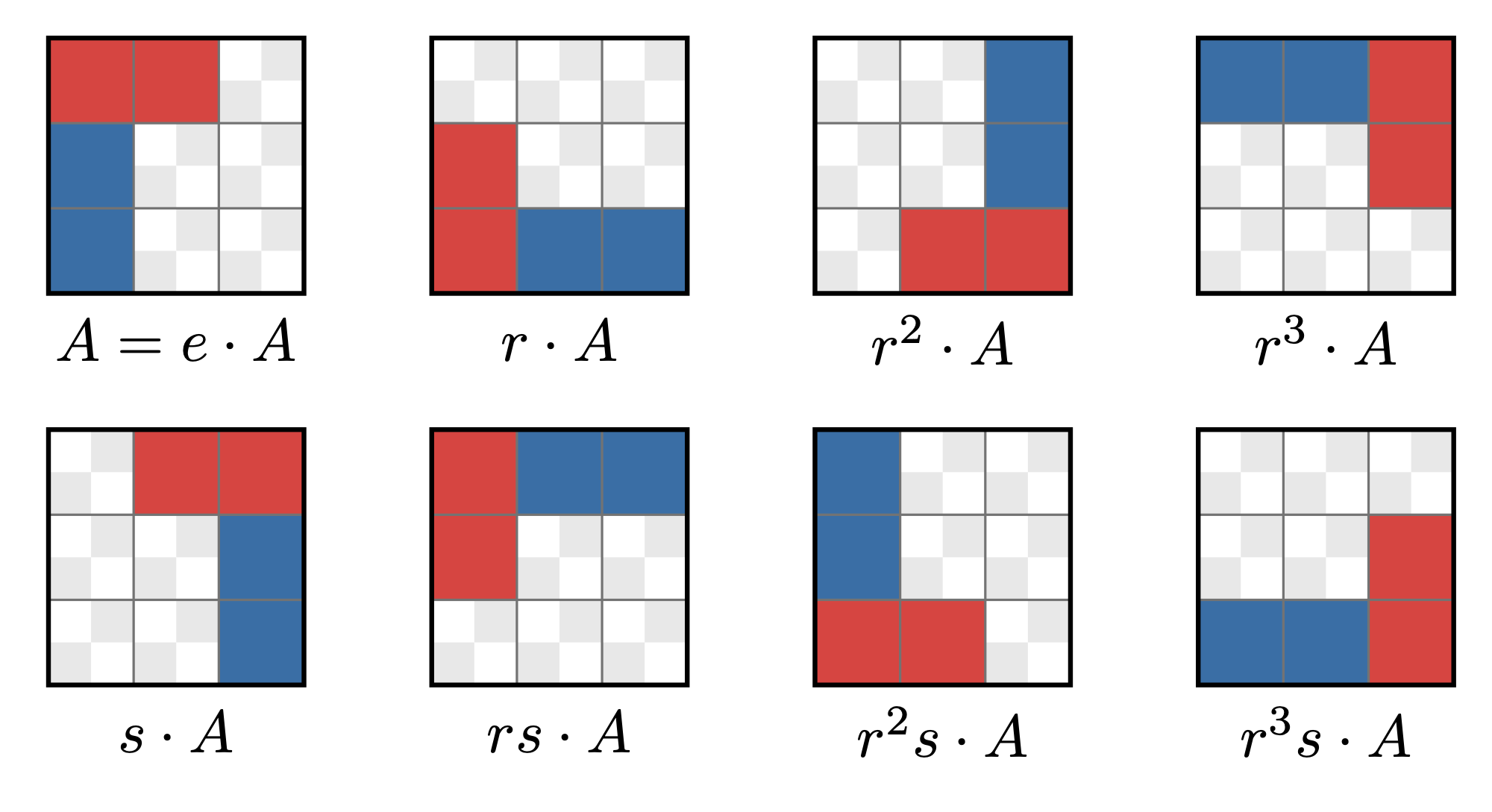
Application: a solver for the puzzle Color Code (SmartGames). Given a target picture and a fixed set of transparent tiles, it finds which tiles to stack, how to rotate them and in what order. It runs a greedy best-first search over a composite similarity measure, with no pretrained model and no per-target training. Built with AI assistance.
Web-based smooth fractal sandbox
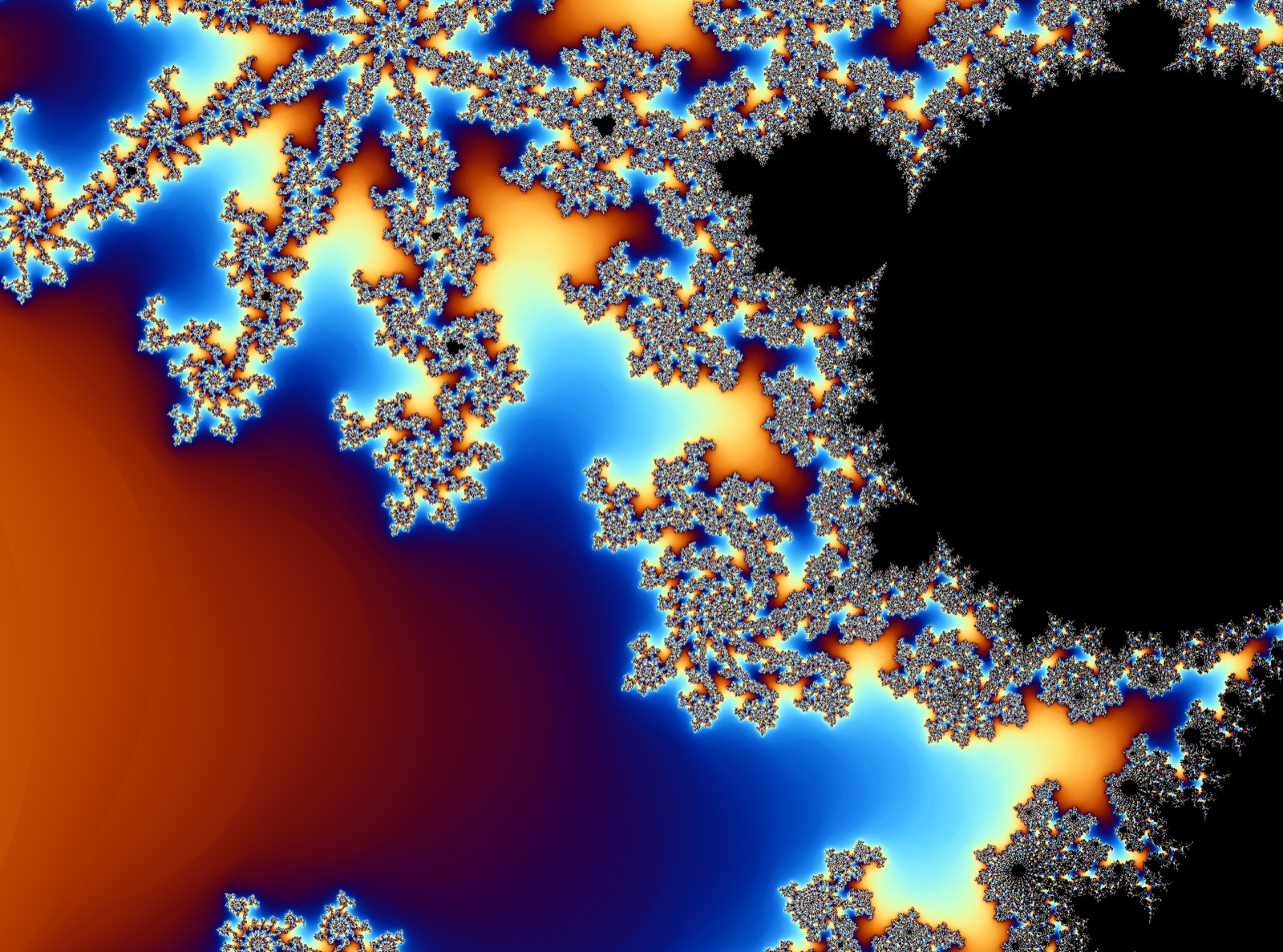
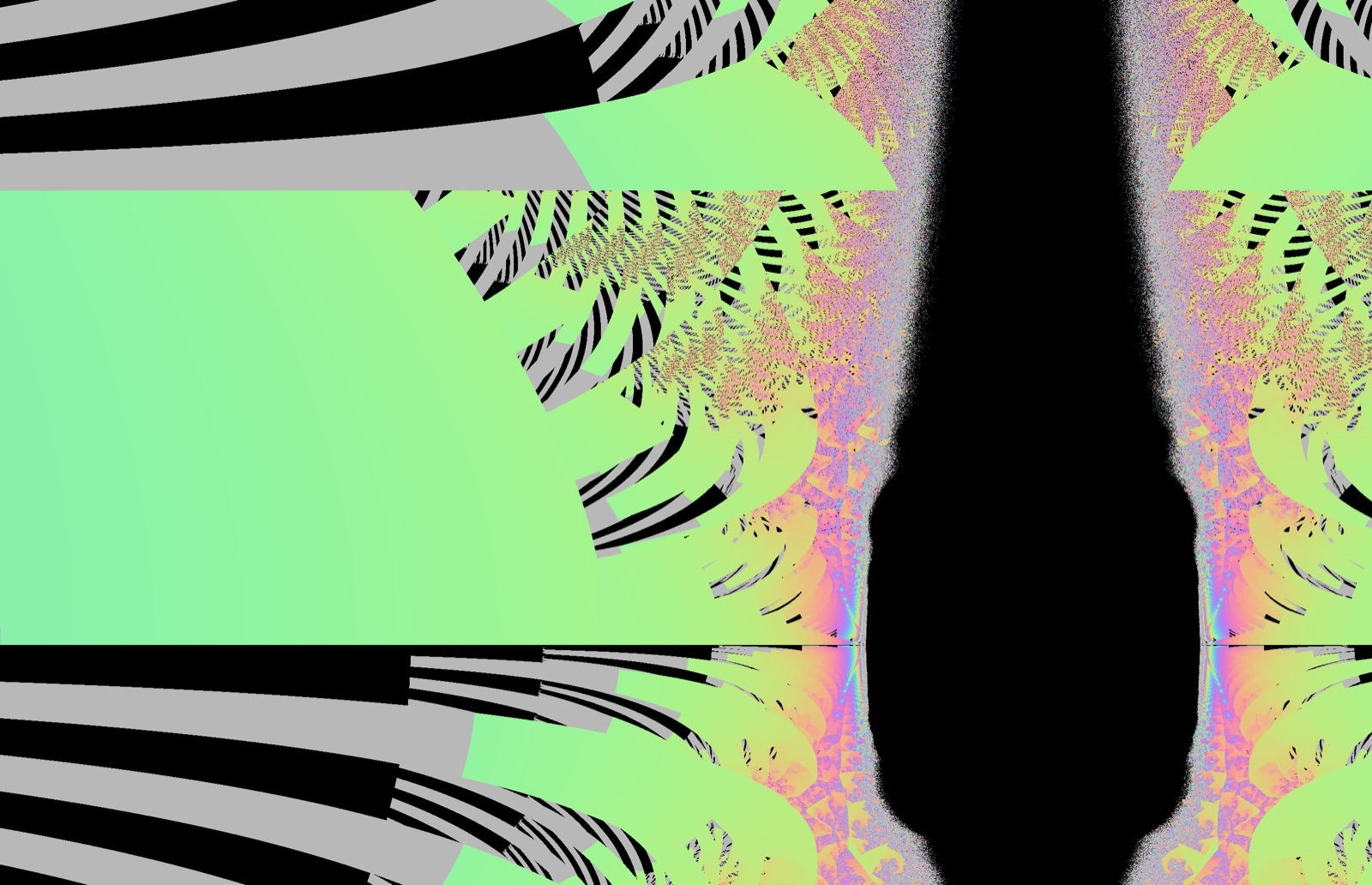
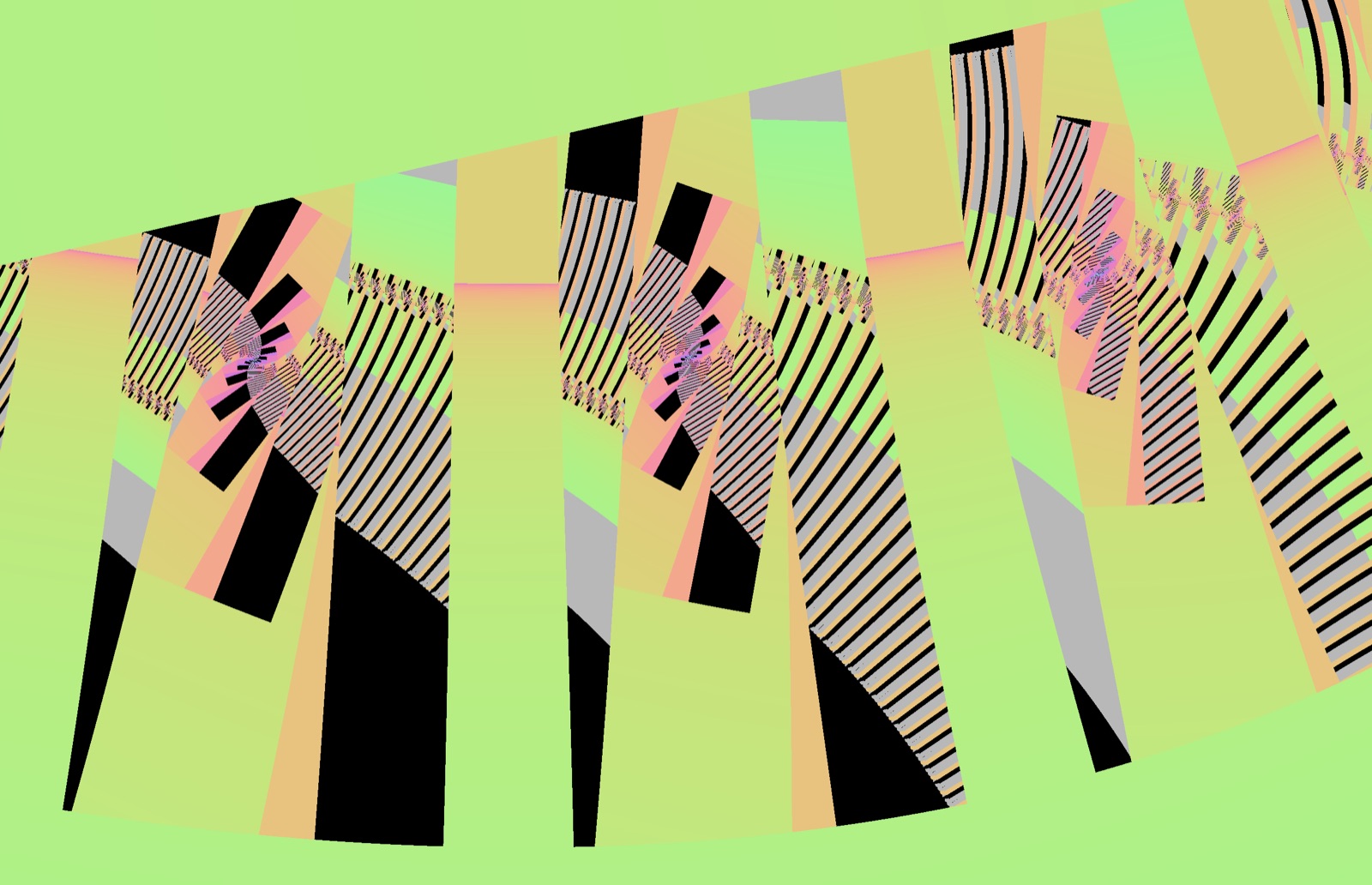
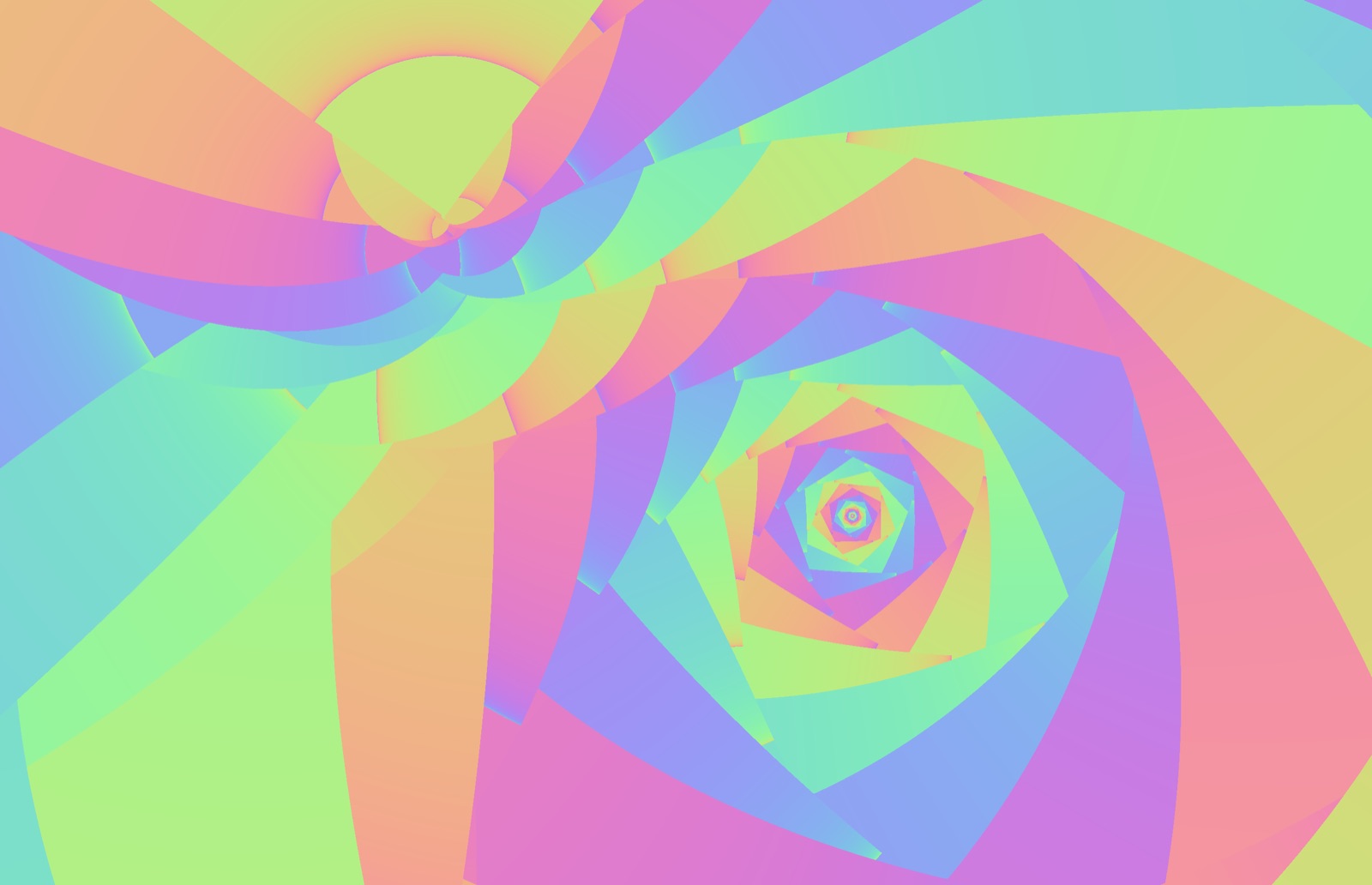
A sandbox for iterating any recursion over the complex plane: you write the iteration step, the escape condition and the starting value yourself, drag the constant c, and set the iteration count and palette. Julia and Mandelbrot sets are just two of the presets. Zoom and pan smoothly, and export a PNG. Automatic differentiation via dual numbers. Built with AI assistance.
Non-random sampling in small local communities
Extended Project Qualification, graded A. A statistics investigation built on an original survey of a heterogeneous population with clear, mutually exclusive groups. Simple random sampling was the baseline against which five sampling methods were compared on how well they estimated central tendency and spread, with Monte Carlo simulation drawing the samples.
Both sub-hypotheses were falsified for the same structural reason: each rested on an untested assumption. I expected quota sampling to distort the estimate most because its gender quota was unbalanced, but gender proved independent of opinion. I expected Neyman allocation to sit closest to the baseline, but its optimality theorem guarantees low variance, not proximity to a reference.
Minecraft reinforcement-learning agent
A working Fabric mod for Minecraft 1.20.1 that spawns a learning bot driven by continual (lifetime) reinforcement learning with internal behavior state. It runs in-game and logs the agent’s live state: steps, HP and a “panic” signal. Written directly in Java.
Stochastic market simulator
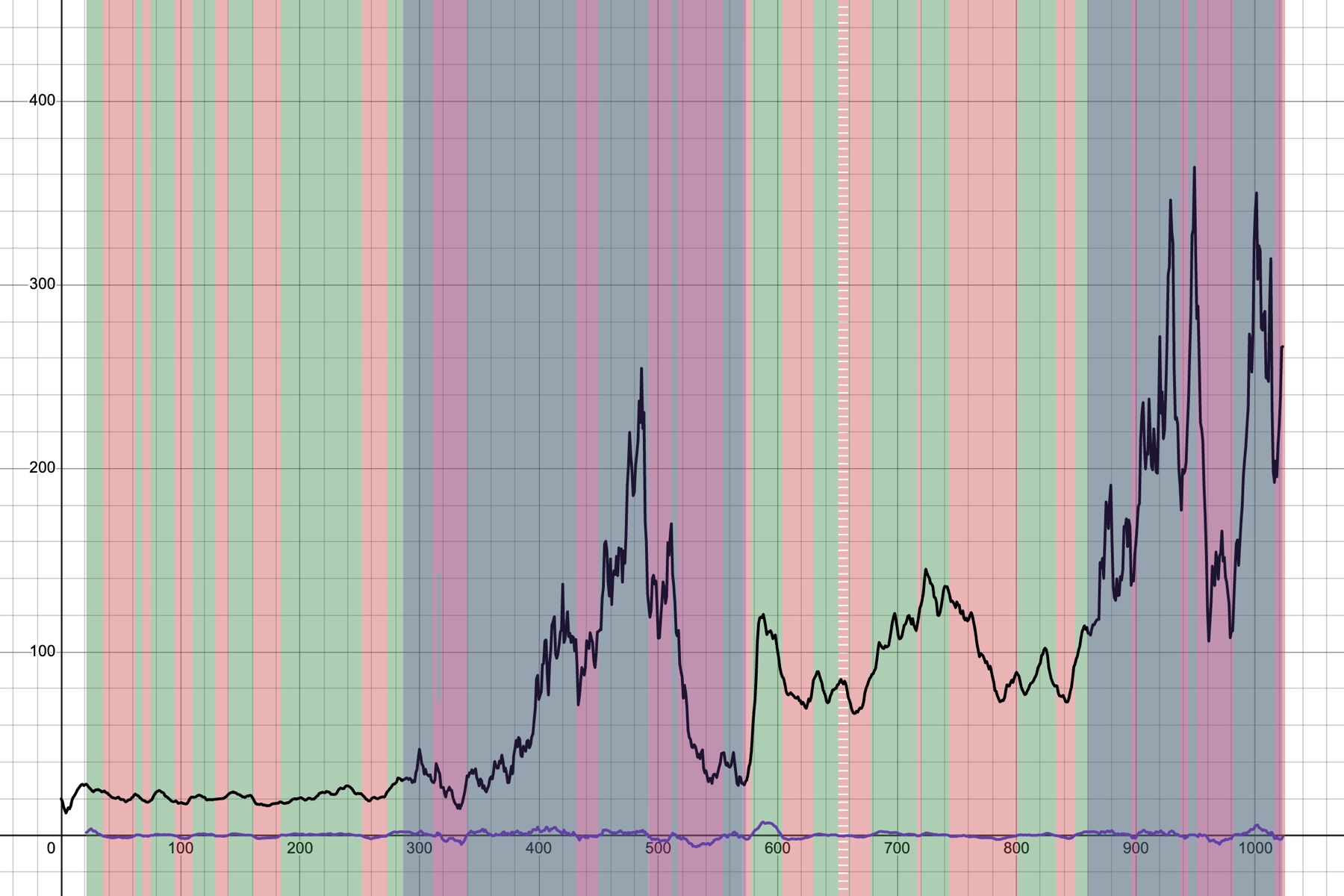
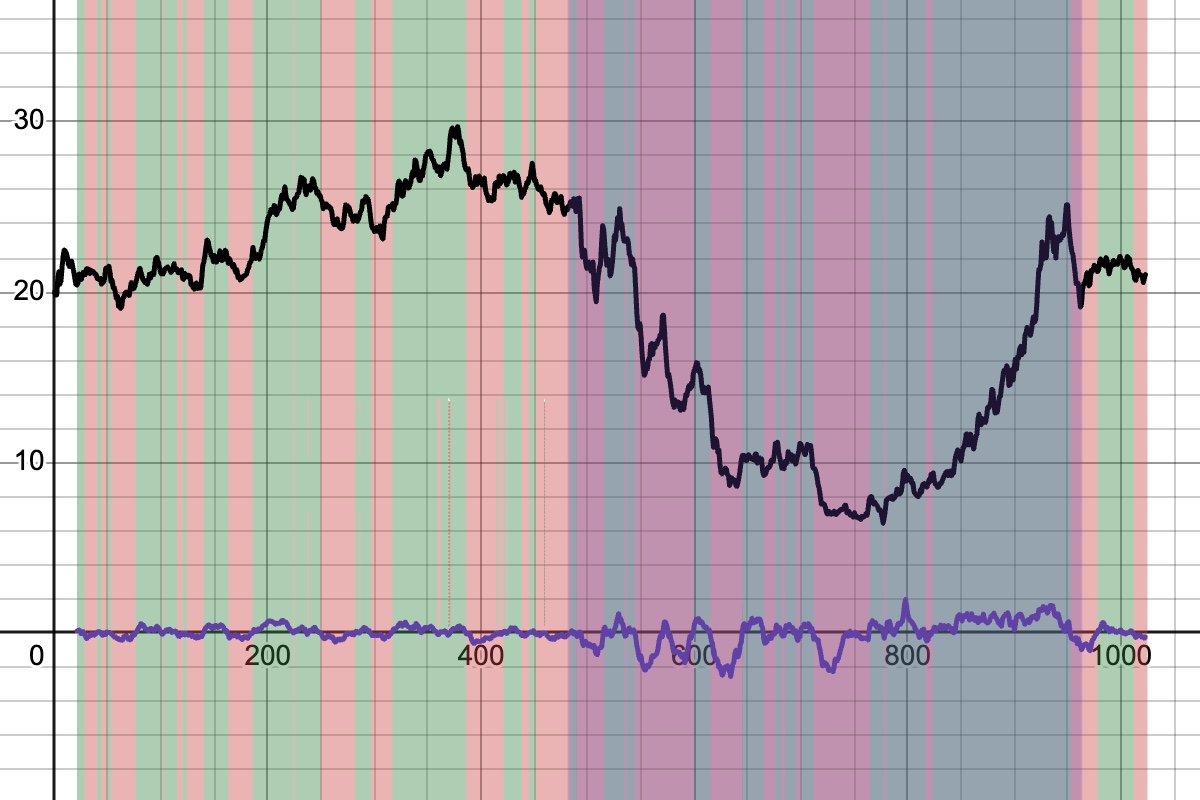
A geometric Brownian motion price path, pₜ = pₜ₋₁·exp(drift + Gaussian shock), with regime-switching drift and volatility, and an N-day moving average of returns plotted beneath. Regimes are shaded: green for an uptrend, red for a downtrend and blue for a crisis, when volatility spikes and the returns average swings far more. Animated step by step with Desmos’s tick action.
p-trigonometry
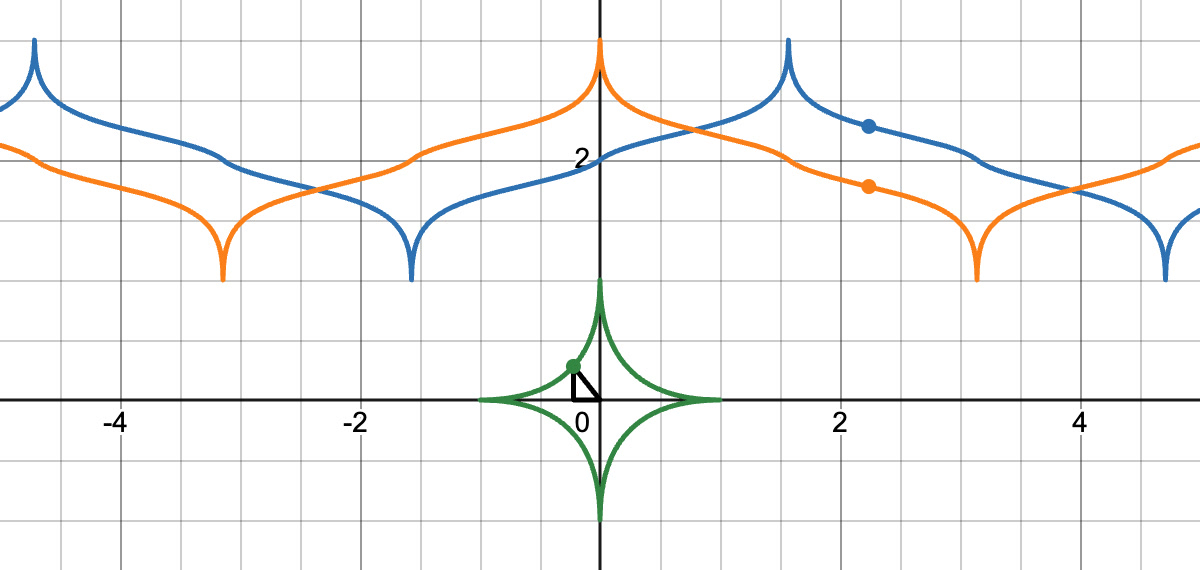
Trigonometry generalized to the Lₚ unit circle: sine- and cosine-like functions defined as the coordinates of a point traversing the p-norm unit “circle” (a squircle when p > 2), with the complex-plane construction cos x + i·sin x and the rounded, flattened waves that result. Recreational mathematics on how trigonometry changes when the norm does.
Mathematical modeling
Monte Carlo simulations, an Euler-method ODE solver and a few machine-learning algorithms.
XOR neural network
Built and trained by hand in NumPy, with no framework, to learn backpropagation from first principles.
Recreational Desmos
Complex numbers, linear maps, random variables, number theory.
Writing
Education
Byron College, Athens
2025 – 2027Pearson Edexcel International A-Level, final year 2026–27 · results August 2027
| Subject | AS (achieved) | A2 (predicted) |
|---|---|---|
| Mathematics | A | A* |
| Further Mathematics | A | A* |
| Computer Science | A | A* |
| Extended Project (EPQ) | A | — |
Predicted grades are school-certified (Byron College, October 2026) and will be sat in June 2027. Mathematics and Further Mathematics cover six distinct units with no overlap.
English
June 2026IELTS 7.5
Senior UKMT (UK Mathematics Trust)
2025, 2026Technical skills
I write Python (NumPy) and LaTeX myself, and direct AI-assisted development in TypeScript, WebGL2/GLSL and Lean 4.
Self-directed learning
- DelftX Probability Theory (online), taken ahead of the Year 12 syllabus: random variables and the notation and limitations of the Poisson, Bernoulli and Binomial distributions.
- deep-ml.com, calculus for ML: 22 problems solved.
- Textbooks: Herstein, Topics in Algebra; Vinberg (algebra); Feder, Fractals; Stewart (multivariable calculus); Statistics: A Very Short Introduction.
- UX/UI design: a one-year, 490-hour online course (2023) on user psychology, cognition and prototyping software logic.
Other
- Volunteering for Breast Cancer Awareness Month: made ribbons (2026) and sold them (2025).
- Reading on design and startups: What Makes Great Design, Laws of UX, SETTERS, Zero to One; currently Bauhaus and Design Is Storytelling.